Back
February 18, 2026
AI is transforming how we work and live, but it comes with an energy cost that’s often overlooked. Every query requires power-hungry data centers, making the environmental footprint of AI significant. At ON A MISSION, we help users and companies take meaningful action by planting trees to compensate for their digital impact, because when tech and nature work together, everyone benefits.


AI has quietly become part of everyday work.
We use it to write emails, analyse data, generate code, answer questions, and move faster. For many organisations, AI is no longer experimental, it’s operational.
What’s far less visible is what happens behind the screen every time an AI tool is used.
When you enter a prompt into an AI system, the response doesn’t come from thin air.
It is generated inside large data centres filled with high-performance servers running around the clock. These machines consume electricity to compute answers and additional energy to stay cool. That process is repeated millions of times, every day, across the globe.
Individually, a single AI query feels insignificant. At scale, it becomes something else entirely.
Current estimates suggest that:
On its own, this is barely noticeable.
But when usage scales to millions of users and billions of prompts, the energy demand rises sharply. At current growth rates, researchers estimate that daily AI query energy use could rival the annual electricity consumption of tens of thousands of households.
And that’s only the usage phase.
Electricity is only part of the story.
Data centres rely heavily on water-based cooling systems. On average, each AI interaction uses a small amount of water, roughly one-fifteenth of a teaspoon per prompt, to keep servers operating safely.
Again, the issue is not a single use. It’s repetition at scale.
This isn’t about blaming users or discouraging innovation.
AI has enormous potential to support climate solutions, from improving energy efficiency to monitoring ecosystems and reducing waste.
But responsible use starts with understanding that digital activity has a real-world footprint.
What we can measure, we can manage.
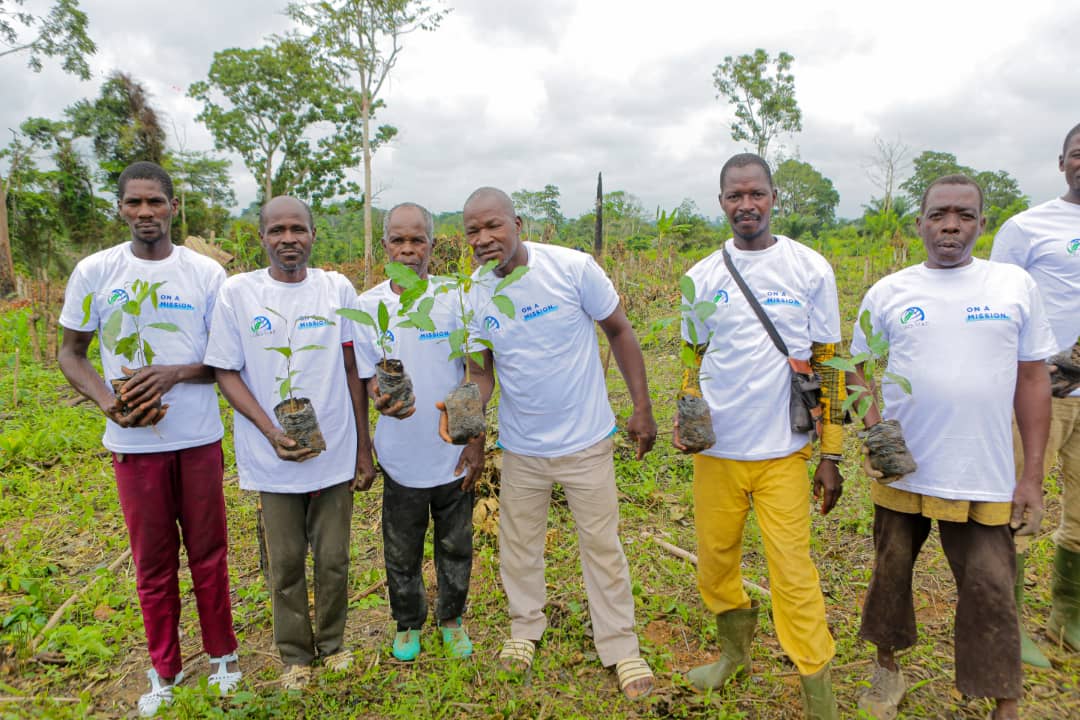
At ON A MISSION, companies and individuals can take responsibility for the emissions associated with their AI usage by supporting community-led reforestation projects in regions that need restoration, jobs, and long-term land stewardship.
Trees don’t erase the footprint of technology, but they do contribute to regeneration when paired with responsible use.
Well-managed reforestation projects:
Our focus is on projects led by local communities, where trees are planted, protected, and managed for the long term.
AI will continue to grow. That’s a reality.
The question is whether we acknowledge its footprint, and whether we choose to balance innovation with regeneration.
Using AI to work smarter doesn’t have to come at the planet’s expense.
If you’d like to explore a partnership or learn more about supporting reforestation, get in touch.
Contact: Rob Slater
Email: rob@onamission.world

.jpg)